
A clean jobsite isn’t just easier to work in; it makes the next step feel manageable. Before arranging construction debris removal in Tampa or nearby communities, confirm whether service is available for your address. Ask whether same-day or next-day junk removal is an option; timing for a construction debris pickup depends on the job.
It’s natural to want a clear answer on both service coverage and cost before arranging a cleanup. This guide explains how to check whether construction debris removal is available for your location, what to know about pickup timing, and how pricing is shaped by practical details such as debris volume and weight, access to the materials, labor, and disposal requirements.
You’ll also learn what information helps a professional understand the job, how construction debris differs from other unwanted items, and what to expect when arranging removal. With those details in hand, it’s easier to plan a cleanup that fits your project and get the site ready for what comes next.
Key Takeaways
- Learn which local disposal options accept construction debris and which are meant for other types of household waste.
- See what to consider when planning pickup timing across Tampa Bay, so cleanup fits your project schedule.
- Understand how debris volume, weight, site access, labor, and disposal needs affect a removal estimate.
- Know what details help a professional assess the cleanup and decide whether a hauling service is the right fit.
Where is your construction debris removal service available in Tampa, FL?
Construction cleanup in Tampa can involve lifting, loading, hauling, and clearing a work area. For residential projects, that may mean removing drywall scraps, flooring, or leftover lumber. Commercial sites may need debris gathered from renovation areas before trades continue. The work begins by identifying what needs removal, where it sits, and how crews can access it.
Post-construction cleanup focuses on removing leftover materials that obstruct rooms, walkways, or work zones. A final project cleanout can clear bulky debris from a remodel before a property is staged, occupied, or handed back to its owner. Real estate cleanups may also combine renovation debris with unwanted furniture or appliances, which require separate removal planning.
Before work begins, contractors and homeowners should clarify who will arrange construction debris removal in the project agreement. Disposal options and accepted materials can vary, so check current guidance with the relevant local authority before taking debris to a drop-off site. The City of Tampa lists McKay Bay Scale House at 114 S. 34th St, Tampa, FL 33605; confirm current requirements before visiting.
Some materials need special attention before removal. If a project involves a pre-1980 home and suspect materials, consult a qualified professional about whether testing is appropriate before demolition. Do not rely on a general drywall or plaster bag-weight figure, such as 40 to 50 pounds; ask about safe handling based on the material and site conditions. These details help define what can be included in a cleanup plan.
What services are available in Tampa? Professional construction debris removal can cover lifting, loading, hauling, disposal, and clearing the job area. The scope can be tailored to residential or commercial renovation debris, post-construction pickup, final project cleanouts, and real estate preparation. Share the material types, approximate volume, and where debris is located so the removal plan reflects the actual site and access conditions.
Service area across Greater Tampa Bay
For jobs in Tampa or nearby communities in Hillsborough and Pinellas counties, share the job address rather than only saying “Tampa Bay.” The address helps confirm whether the job is within the service area, especially when coordinating work at multiple properties.
Town ‘N’ Country and Oldsmar have dedicated construction debris service pages. A project near either area can involve different access conditions, from a residential driveway to a commercial loading zone. Construction debris service in Town ‘N’ Country is one example; confirm service availability for the specific job address.
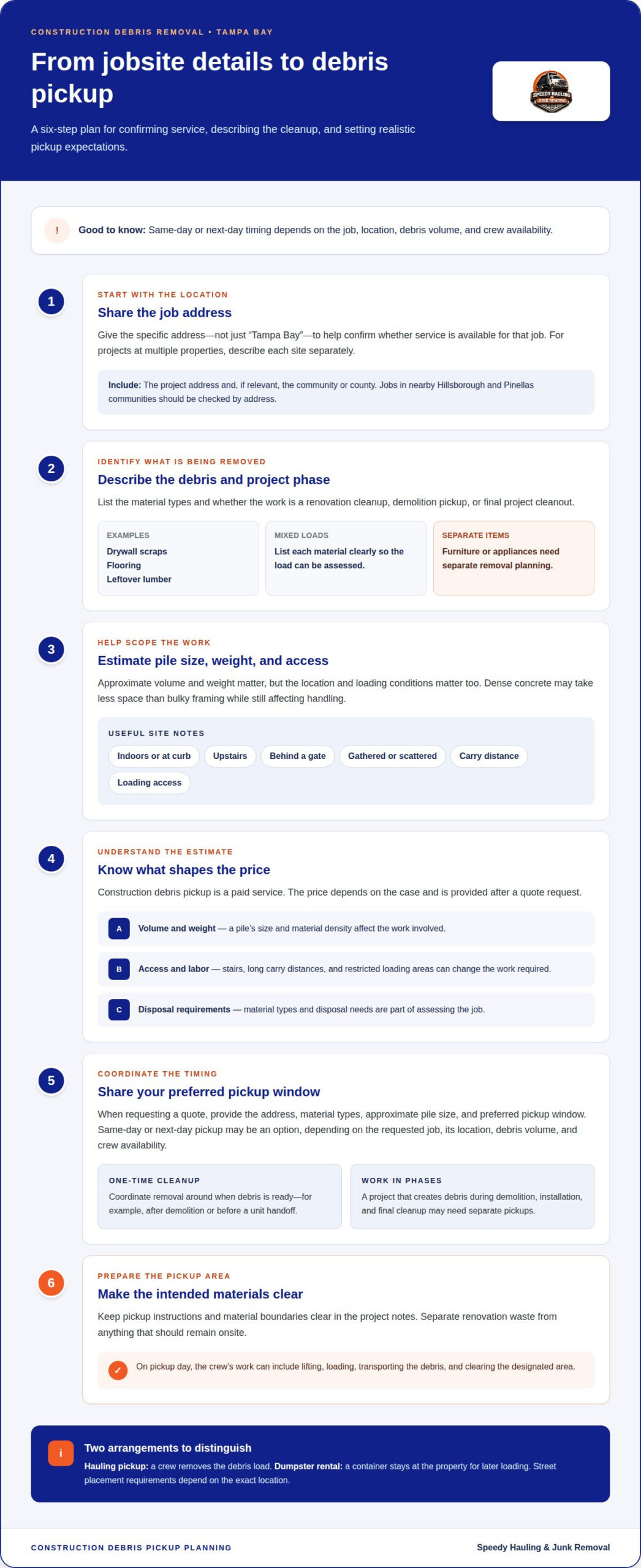
For projects at multiple locations, describe each jobsite separately. Note whether debris is indoors, at the curb, upstairs, or behind a gate, and whether materials are gathered or scattered. These details help the crew understand the carry distance and loading access. List mixed materials clearly so the load can be assessed accurately.
A hauling pickup and a dumpster rental are different arrangements. A dumpster stays at the property for later loading, while a hauling crew removes the debris load. For a dumpster placed on a Tampa street, determine the applicable right-of-way requirements before placement. The rules depend on the exact location; debris pickup without a street container is a separate setup.
To assess a removal job, the crew needs to understand the debris types, approximate volume and weight, and loading access. Dense concrete may take up less space than bulky framing but still affect the handling required. Share the address, access notes, and clear photos or a description of the pile to help scope the job.
For a site-specific estimate, share the project address and details about the debris with Speedy Hauling & Junk Removal.
Same-day and next-day pickup availability
Renovation schedules can shift quickly when debris blocks a room, driveway, or loading area. Same-day or next-day timing depends on the requested job, its location, the debris volume, and crew availability. Demolition debris may also need a different handling plan than lighter renovation scraps. Share the project address, material types, approximate pile size, and preferred pickup window. Those details help establish a realistic schedule for the work.
Construction debris pickup is a paid service, but the price depends on the case and is provided after a quote request. Volume, weight, access, labor, and disposal requirements shape the estimate. A pile of lightweight trim beside a driveway differs from heavy concrete carried from an interior renovation. Stairs, long carry distances, restricted loading areas, and mixed materials can also affect the work involved. Describe those conditions clearly when requesting a quote.
On pickup day, the crew’s work can include lifting debris, loading it, transporting it, and clearing the designated area. Keep the pickup location and material boundaries clear in the project notes. For example, separate renovation waste from items that should remain onsite. This helps prevent confusion during loading and keeps the cleanup focused on the intended materials.
Scheduling works best when it accounts for the renovation phase, site access, and when debris will be ready. A contractor may coordinate removal after demolition, while a property manager may schedule it before a unit handoff. Keep the address, access instructions, debris description, and timing preferences together. These details provide a practical way to track the pickup plan without assuming a live-tracking tool.
Projects that generate debris over several work phases may need recurring pickups rather than one final haul. For example, a renovation can produce separate loads during demolition, installation, and final cleanup. Plan each requested visit around the expected debris and site conditions. If material volume changes, update the project details so the pickup plan reflects the current load.
Construction debris removal pricing
Construction debris removal pricing depends on the actual load and work required. A pile of lightweight packaging differs from dense concrete, even when both occupy similar space. Volume, weight, labor, access, and disposal requirements all affect the estimate. The price depends on the case and is provided after a quote request.
Volume describes how much debris needs to be removed, while weight affects handling and transport. A pile of trim beside a driveway is different from heavy flooring or concrete inside a building. Describe the material types and approximate load to help the crew assess the job.
Access affects the work involved. Carrying debris down stairs, through a narrow hallway, or across a property takes more handling than loading materials beside a truck. Mention gates, parking limits, elevators, and whether the debris is already gathered. Loose drywall across several rooms, for instance, differs from one consolidated pile.
Describe all materials in the load, including demolition debris, packaging, and bulky items. Some materials may require specialized handling, and not every item can be removed. A clear inventory helps define the requested work and avoid confusion about what should be taken.
What should you consider when choosing a Tampa debris removal company? Clarify the scope, whether lifting and loading are included, how disposal fees are handled, and how access or changes to the load affect the estimate. For example, list debris from both a kitchen remodel and a garage renovation rather than assuming both areas are included.
Before scheduling, gather the site address, material list, access notes, and a clear view of the debris. These details connect the estimate to the actual clearing work, whether the load is concentrated in one room or spread across a jobsite. Use the booking form to share these project details and help make the pickup easier to plan.
Speedy Hauling & Junk Removal: Construction Debris Removal
Speedy Hauling & Junk Removal provides construction debris removal for residential and commercial projects in Tampa and nearby communities. Share the job address, debris types, approximate load, and access details to request an estimate. Service availability depends on scheduling.
Some projects also leave unwanted household items behind. Furniture removal and appliance removal can address those items alongside construction debris. For a broader property cleanup, garage cleanouts can help clear accumulated items beyond the renovation pile. Describe each requested item so the work is clearly scoped.
Contact Speedy Hauling & Junk Removal to discuss construction debris removal for your project.
Make the Next Project Step Easier
A cleared work area can make room for the next renovation phase, a property handoff, or a commercial reopening. Before arranging construction debris removal in Tampa, identify what the space needs to support next. That helps keep the cleanup focused on the project’s needs.
A contractor may need clear access for upcoming work, while a real estate professional may be preparing a property for a showing. Defining the goal helps set a practical scope for the cleanup and keep the project moving.
Keeping the next use in mind helps turn cleanup into progress.
Frequently Asked Questions
How much does construction debris removal cost in Tampa?
There isn’t one flat price for every cleanup. The estimate depends on the debris volume and weight, how far materials must be carried, site access, labor, and disposal requirements. A small, accessible pile differs from mixed debris spread across several rooms. Provide the job address and a clear description or photos of the materials to help establish the project scope before scheduling.
What types of construction debris can Tampa haulers remove or recycle?
Construction debris may include lumber, drywall, plaster, flooring, packaging, or concrete, depending on the project. Describe mixed loads clearly, especially when they include both bulky and heavy materials. Recycling depends on the material’s condition and the receiving facility; not every item can be recycled. Suspected hazardous materials require specialized handling.
Where can construction debris be recycled or disposed of near Tampa?
Construction debris needs a disposal destination that accepts the specific materials. Tampa’s McKay Bay Scale House does not accept construction debris, so it isn’t a drop-off option for renovation waste. Recycling may be possible for suitable, separated materials at facilities that accept them. Ask about the intended route for each material type when arranging hauling, particularly for mixed loads or heavy concrete.
How quickly can construction debris be picked up in Tampa?
Same-day or next-day pickup may be available depending on scheduling. Timing can depend on the job address, load size, access, and when the debris is ready to go. For example, a crew needs a clear pickup location and accurate details about renovation waste before planning the visit. Share those details when booking so the schedule can account for the actual site conditions.
What are Hillsborough County rules for construction and demolition waste disposal?
Hillsborough County contractors must haul construction debris generated by their work. Homeowners should ensure debris removal is included in the contractor’s project agreement.

Article by
ALBERTO HERNANDEZ
Alberto Hernandez is the owner of Speedy Hauling & Junk Removal, a family-owned junk removal and light demolition company serving Tampa Bay. With years of hands-on experience completing residential and commercial junk removal, property cleanouts, debris hauling, and light demolition projects, Alberto shares practical information based on real jobs and real customer needs throughout the Tampa Bay area.