
A bulky appliance can turn a straightforward cleanout into a logistical headache. Planning appliance removal in Tampa can help you account for the heavy lifting and haul-away, while the right pickup plan depends on the appliance and the property.
Before arranging appliance removal in Tampa, ask the provider which items they accept and how to prepare. The estimate can depend on the load, access, labor, and disposal needs, so sharing those details helps the provider plan the job.
Whether you need a single appliance removed or several items cleared during a property cleanout, knowing what to expect makes planning easier. This information can help Tampa Bay homeowners, property managers, landlords, real estate professionals, contractors, and businesses prepare for appliance removal.
Key Takeaways
- Learn which major household appliances may be suitable for pickup and why an appliance’s condition can affect eligibility.
- Get a clearer picture of how location, access, appliance size, and haul-away needs shape pickup planning.
- Understand the disconnection considerations involved and the U.S. Environmental Protection Agency’s refrigerant recovery requirement.
- See how large-appliance collection works and when professional removal can help clear space during a home or property cleanout.
Pickup of washers, dryers, refrigerators, stoves, and freezers
Common appliance removal requests in Tampa include washers, dryers, refrigerators, stoves, ovens, and freezers. When describing an appliance, note its condition and location, along with any access challenges. That information helps the team understand the job and prepare for pickup.
Working or repairable washers and dryers may be more suitable for reuse than units missing essential parts. When describing an item, include its type and condition so the team can assess the requested removal.
Refrigerators, freezers, stoves, and ovens are common large items. Access can affect the work: a refrigerator in a garage may be easier to reach than one in a tight kitchen. Note stairs, narrow doorways, and the appliance’s location when requesting an estimate.
Dishwasher and Microwave Pickup Conditions
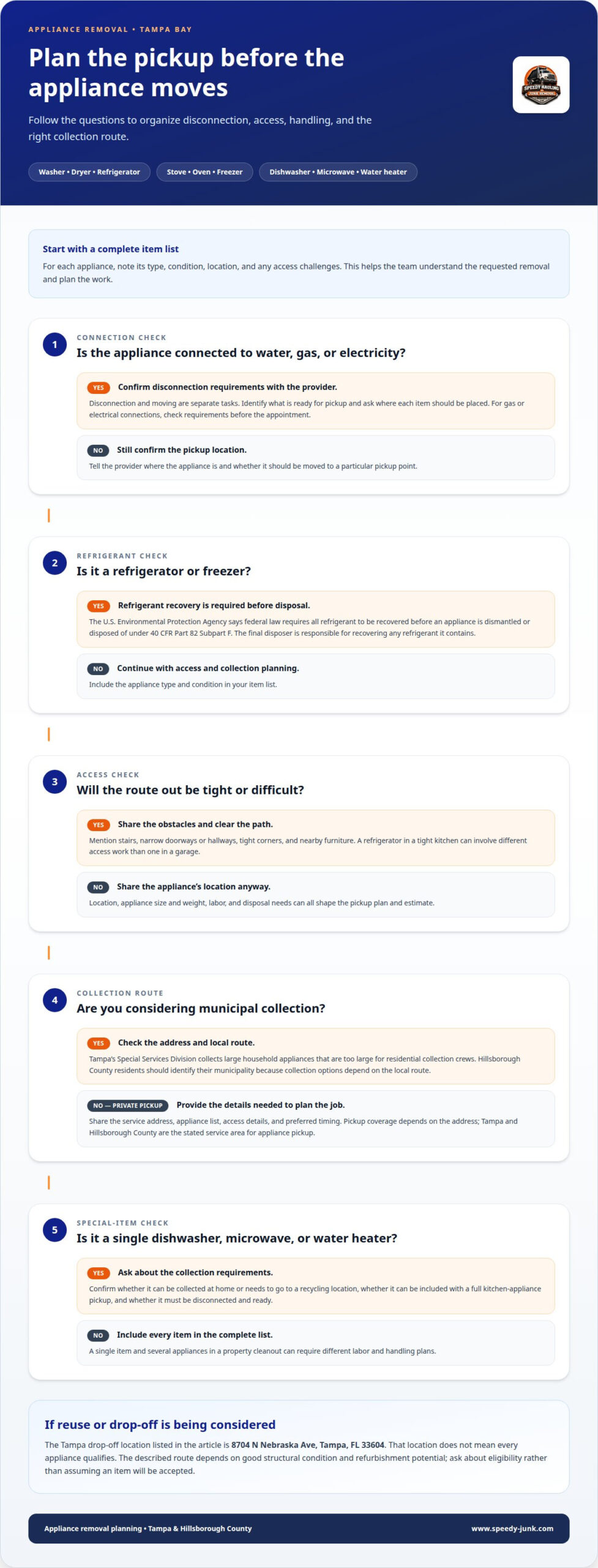
Dishwashers and microwaves may have different pickup requirements from larger appliances. Ask whether a single dishwasher, microwave, or water heater can be collected at home or needs to be taken to a recycling location. Also ask whether these items can be collected with a full kitchen-appliance pickup and whether they need to be disconnected and ready.
For example, list a microwave separately if it is the only item, or include it with a refrigerator, stove, and other appliances. A complete item list helps the team plan the requested removal.
Disposal Rules and Pickup Scheduling
Tampa’s Special Services Division collects large household appliances too large for residential collection crews. Hillsborough County residents should identify their municipality when arranging disposal, because collection options depend on the local route.
To ask about private pickup, share the service address, appliance list, and access details, including stairs or a narrow entry. Include your preferred timing when contacting Speedy Hauling & Junk Removal to discuss the requested service.
Appliance removal service areas around Tampa
Pickup coverage depends on the address, not just the appliance. Tampa and Hillsborough County are the stated service area for appliance pickup, while nearby Tampa Bay communities may have different collection options. Share the pickup address first so the service route can be matched to the property.
A Tampa drop-off location is listed at 8704 N Nebraska Ave, Tampa, FL 33604. That address can help residents understand where a drop-off option is located, but it does not mean every appliance qualifies for drop-off or collection. Condition and reuse potential matter: appliances need good structural condition and refurbishment potential for that route. Some appliances may provide another 5 or 10 years of service after repair, depending on their condition.
An appliance’s condition can affect how it is handled, but don’t assume every item will be accepted for reuse or that pickup is free. Speedy Hauling & Junk Removal provides appliance removal and can include appliances in a broader junk removal job.
Appliance removal is useful when you need a bulky item hauled away, while broader junk removal can cover mixed unwanted items. Retailer haul-away may be tied to a new appliance delivery. For private removal, access, weight, labor, and disposal needs affect the estimate. An upstairs refrigerator, for example, involves different access work than a ground-floor washer.
For service information specific to the city, see Tampa appliance removal details. If your address is in Tampa or Hillsborough County, request an appliance pickup estimate with the location and appliance details.
Appliance disconnection and haul-away
Before pickup, confirm with the service provider which appliances need to be disconnected and where they should be placed. This includes items such as a washing machine with water connections or an electric range. Disconnection and moving are separate tasks, so identify which appliances are ready for pickup when requesting an estimate. For gas or electrical connections, check with the provider about disconnection requirements before the appointment.
Refrigerators and some other appliances contain refrigerant, so disposal requires careful handling. According to the U.S. Environmental Protection Agency, federal law requires all refrigerant to be recovered before an appliance is dismantled or disposed of under 40 CFR Part 82 Subpart F. The U.S. Environmental Protection Agency also states that the appliance’s final disposer is responsible for recovering any refrigerant it contains.
For a refrigerator, consider the route from the kitchen or garage to the pickup point. Narrow hallways, stairs, tight corners, and nearby furniture can affect the work involved. Clear the path and share accurate access details so the removal team can plan the haul-away.
Disconnection is a separate consideration from lifting and hauling. Water lines, electrical connections, and gas connections require appropriate handling before an appliance is ready for pickup. A refrigerator that is unplugged differs from a connected range or washer; confirm with the service provider which items need to be disconnected and whether they should be moved to a particular pickup location.
Haul-away planning also depends on the number and type of appliances, their weight, pickup access, and disposal requirements. One ground-floor freezer presents a different job from several appliances in a multi-level property. Share the item list and note stairs, narrow entries, or other obstacles when arranging removal. That information helps shape the labor and handling plan without confusing disconnection with transport.
Collection of large household appliances
In Tampa, the City’s Special Services Division collects large household appliances that are too large for residential collection crews. This option is distinct from ordinary curbside collection. A refrigerator or stove may need special handling because its size makes standard collection unsuitable. The collection route depends on whether the property falls within Tampa’s program.
Eligibility also depends on the address and account. The City of Tampa’s residential special-services program serves customers with active refuse accounts who live in single-family homes or multi-unit properties of four units or less. Residents can request special services by calling the Utilities Call Center at (813) 274-8811, according to the City of Tampa.
Before municipal collection, consider where the appliance will be placed and what surrounds it. Tampa collection crews won’t collect items blocked by vehicles or other obstacles. Keep the appliance clear of access routes and away from low-hanging limbs, utility lines, water meters, and utility boxes.
For a property manager clearing a rental, distinguish one oversized refrigerator from a full unit cleanout. The City’s special collection is for large appliances, while a broader property clearout may call for private junk removal. Appliance type, access, labor, and disposal needs shape the work. An upstairs item also involves different handling from one already at ground level.
Residents outside Tampa city limits shouldn’t assume the City’s program covers their address. Hillsborough County communities may follow different collection arrangements. Identify the municipality, confirm whether the property has an active refuse account, and describe the appliance and access conditions when requesting service. A clear appliance list helps distinguish a refrigerator pickup from a mixed property cleanout.
Speedy Hauling & Junk Removal: Appliance Removal
If you are considering appliance removal in Tampa or nearby communities, contact Speedy Hauling & Junk Removal to confirm whether the service is available for your location and items. Ask about garage or property clearouts too if the job includes furniture or other belongings. Share the item list, pickup address, and access details so the job can be reviewed.
For one appliance or a larger cleanout, factors such as load size, access, labor, and disposal needs may affect the job. Have these details ready when requesting an estimate, and confirm whether it is free. A clear description helps set expectations for the pickup and the space you want cleared.
Make the Next Step Easier
Before arranging appliance removal in Tampa, decide what you want cleared and what should stay. An item list, pickup address, and clear access details help define the job, whether it involves one appliance or several.
If an old refrigerator is part of the clutter, note the other appliances you want removed as well. Sharing the full list and describing the space can help clarify the pickup needs. Choose the scope that suits your needs, from one appliance to several.
When you’re ready, share the appliance list, address, and access details to discuss your pickup. Contact Speedy Hauling & Junk Removal to plan the next step.
Take the next step toward a more usable space.
Frequently Asked Questions
What appliances do Tampa removal companies accept?
Common appliance removal requests include washers, dryers, refrigerators, stoves, ovens, and freezers. For a rental turnover, list appliances separately from furniture or renovation debris. This helps define whether you need appliance removal alone or a broader property cleanout. Include smaller appliances in the list rather than assuming every item follows the same pickup process.
How much does appliance removal cost in Tampa?
Appliance removal costs can depend on the number and size of items, their weight, and how easy they are to access. Stairs, long carries, labor requirements, and disposal needs may also affect the work involved. When comparing options, describe the appliances and their location so the scope of the job is clear.
Are appliance pickup and disposal services available in Tampa?
Tampa residents can check municipal collection options or contact a private appliance removal service. Collection terms may differ, so note whether the appliance is part of a wider cleanout or a single-item request. For a commercial site, clarify the property’s needs and any access requirements before arranging removal.
Which Tampa companies offer same-day appliance removal?
Same-day or next-day service depends on each company’s schedule, so contact the provider directly to ask about availability. If your job is time-sensitive, mention your preferred timing and whether the appliances are part of a larger cleanout. Confirm the schedule before making plans around the removal.
Does Tampa offer free appliance pickup or recycling?
Municipal programs and private services have different collection terms, so don’t assume every appliance qualifies for free pickup. Recycling eligibility can depend on the item and the program. For private removal, share the appliance list and ask about any specific handling needs when arranging service.
What should I prepare before professional appliance removal?
Decide which appliances are leaving and which items should stay, especially during a rental turnover or estate cleanout. If tenants, staff, or contractors share the property, make sure they know what is included. Clarify building access and any property rules that affect entry. These steps help keep the removal scope clear and avoid confusion at the site.

Article by
ALBERTO HERNANDEZ
Alberto Hernandez is the owner of Speedy Hauling & Junk Removal, a family-owned junk removal and light demolition company serving Tampa Bay. With years of hands-on experience completing residential and commercial junk removal, property cleanouts, debris hauling, and light demolition projects, Alberto shares practical information based on real jobs and real customer needs throughout the Tampa Bay area.