
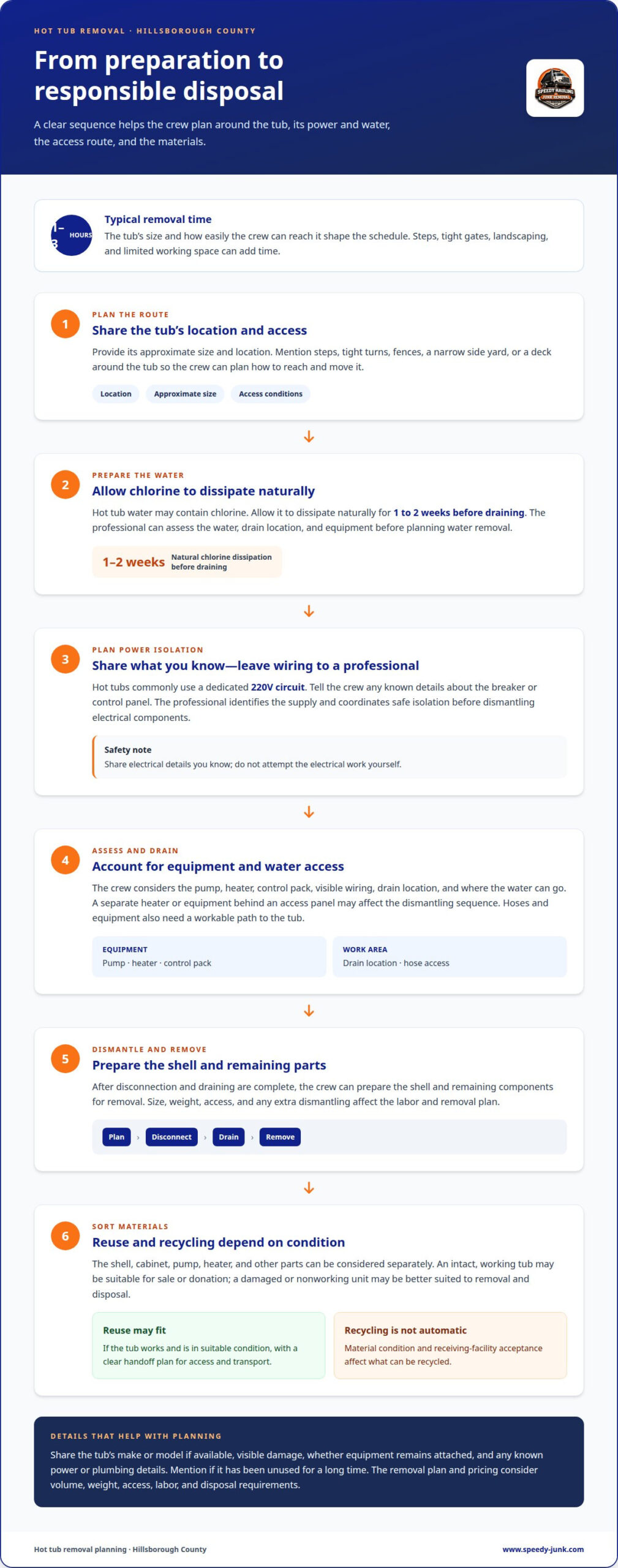
A hot tub can be removed in a few hours, but access and preparation shape the schedule. For hot tub disposal in Hillsborough County, professional removal typically takes about 1 to 3 hours, depending on the tub’s size and how easily the crew can reach it.
It’s understandable to want a clear plan before a large, built-in fixture leaves your yard or patio. A straightforward path helps, while tight gates, steps, or limited working space can add time to the job.
This article explains what affects hot tub removal, what to prepare beforehand, and how draining and disposal fit into the process. You’ll also learn what details to share when requesting removal so the crew can plan around the tub’s size, location, and access. A little preparation helps you understand the logistics and make room for what comes next.
Key Takeaways
- Removal time depends on the tub’s size and how easily the crew can reach it, so access details help set realistic expectations.
- Professional disconnection and draining are important parts of preparing a hot tub for pickup; electrical work should be handled with safety in mind.
- Disposal options depend on the tub’s condition, materials, and the collection route, so bulky-item rules may affect the plan.
- For Tampa S.W.E.E.P., set eligible items out by 8 p.m. on the household’s scheduled Sunday, according to the City of Tampa.
Professional Hot Tub Disconnection and Uninstallation Before Pickup
Professional uninstallation means preparing a hot tub for safe removal and hauling. The crew assesses the tub, its location, and the route to the pickup vehicle before planning the work. Steps, gates, landscaping, and a narrow side yard can change how the crew moves it. Hot tub removal in Hillsborough County typically takes about 1 to 3 hours, depending on the tub’s size and accessibility.
Hillsborough County bulky-item pickup is a scheduled public collection, while professional hot tub disposal in Hillsborough County handles removal from the tub’s current location. County bulky-item requests must be made before items are placed at the curb. A large, awkward tub may need a different plan than ordinary curbside items.
In-home removal means the crew accesses and removes the tub from its current location; curbside pickup means it’s already positioned for collection. In-home removal can suit a tub behind a house or inside an enclosure, where the exit route affects the work. Curbside removal may simplify access when the tub can be safely placed near the pickup point. Share its location, approximate size, and access conditions when requesting service.
To arrange professional hot tub removal, share the job’s location and access details. Mention steps, tight turns, fences, or a deck around the tub. These details help the crew plan the removal. Pricing is volume-based and considers weight, access, labor, and disposal requirements. Difficult access or extra dismantling can add work, so describe the conditions accurately.
Permit requirements depend on the scope of work, especially if it involves demolition or structural changes. Hauling away a freestanding tub differs from altering a built-in deck in Hillsborough County. Before scheduling, clarify which parts of the structure, if any, are included in the removal. This helps define the work and the permit question.
Preparing for Professional Hot Tub Draining and Electrical Disconnection
Draining is the controlled removal of water before a hot tub can be dismantled or hauled away. A professional assesses the water, drain location, and equipment before beginning. Hot tub water may contain chlorine, so allow it to dissipate naturally for 1 to 2 weeks before draining. The crew can then plan water removal around the tub’s condition and the collection appointment.
Electrical disconnection means separating the tub from its power supply before removal. Hot tubs commonly use a dedicated 220V circuit, which makes the electrical setup an important part of the plan. The professional identifies the supply and coordinates safe isolation before dismantling electrical components. A homeowner should share any known details about the breaker or control panel, rather than attempting electrical work.
During the visit, the crew considers the pump, heater, control pack, and visible wiring. For example, a tub with equipment behind an access panel may require a different dismantling sequence from one with exposed components. The crew also considers where drained water can go and how hoses or equipment can reach the tub. Planning these details helps keep the work area organized.
Before the appointment, share the tub’s make or model if available, its location, and any known power or plumbing details. Mention features such as a separate heater or disconnected control panel. These details help the crew prepare without asking you to drain the tub or handle wiring. If the tub has been unused for a long time, mention that too, since its condition may affect how components are removed.
Once disconnection and draining are complete, the crew can prepare the shell and remaining parts for removal. If you’re ready to arrange the next step, schedule hot tub removal with the job details available.
How Professionals Handle Hot Tub Recycling and Responsible Disposal
Responsible disposal means considering reusable parts separately from materials that need disposal. After removal, the crew considers the shell, cabinet, pump, heater, and other components individually. The tub’s condition matters: a cracked shell may have fewer reuse options than an intact one. Material condition and facility acceptance affect what happens next, so recycling isn’t automatic for every part.
Recycling recovers materials for processing into new products. A professional may separate accessible metal components from the shell and other materials, then direct them to appropriate outlets where accepted. For example, a pump or heater may be assessed separately from the cabinet. Plastic and composite shells have different handling requirements, so material and condition affect whether recycling is practical.
Yes, a used hot tub may be sold or donated if it works and is in suitable condition. The buyer or recipient needs a clear handoff plan, including access for removal and transport. Share the tub’s operating condition, visible damage, and whether equipment remains attached. A nonworking unit or one with a damaged shell may be better suited to removal and disposal than reuse.
Before collection, professionals can identify potentially reusable parts and separate materials during dismantling. They account for the tub’s size, weight, access route, and the labor needed to handle its components. Disposal requirements matter too, because receiving facilities determine which materials they accept. A clear work area helps keep components organized, especially where sorting space is limited. The plan should reflect the tub’s actual materials, not assume every hot tub can be recycled whole.
How Professionals Handle Bulky Waste and Hot Tub Disposal
Bulky waste is material too large for the gray residential garbage cart and not collected with weekly service. A hot tub usually needs a separate removal plan because its shell and equipment take up substantial space. Professionals assess its condition, volume, weight, and access route, then plan how to remove and transport it. Steps, a narrow gate, or a surrounding deck can affect the labor involved.
Hillsborough County offers residents several disposal routes, but public collection has specific requirements. Bulky-item pickup requests must be made before items are placed at the curb. County residential customers receive 10 cubic yards of free bulky-waste and appliance disposal at Community Collection Centers per year, with the allowance resetting on Oct. 1 annually. The centers accept bulky waste and appliances only from County Solid Waste customers, and materials must be unloaded by hand.
Tampa S.W.E.E.P. provides another possible route for eligible residential customers. A drained, broken-down hot tub may go in a S.W.E.E.P. curbside pile if it fits within the 10-cubic-yard limit. Items must be set out by 8 p.m. on the household’s scheduled Sunday, according to the City of Tampa. A whole tub that has not been drained and broken down does not meet that stated preparation condition. Confirming the collection route before setting out bulky material helps prevent a missed pickup.
Professional removal suits households that need a tub taken from its location rather than left at the curb. The crew can account for access, dismantling labor, volume, weight, and disposal requirements. These factors shape the work plan; public collection allowances don’t describe every tub or removal situation. Share the tub’s location and surrounding obstacles, especially if a deck or narrow passage affects access. This helps determine a practical removal approach.
Speedy Hauling & Junk Removal
Speedy Hauling & Junk Removal is a practical option when a hot tub’s size, weight, or access makes county collection difficult. Share where it sits, whether a deck or narrow gate affects the route, and whether other bulky items need removal. These details help clarify the work and access needs.
If the hot tub is part of a broader property clear-out, ask Speedy Hauling & Junk Removal whether they can handle the other items as well. The right plan depends on what needs to go and how accessible it is.
Contact Speedy Hauling & Junk Removal to discuss your removal needs.
Make Room for What Comes Next
Consider how you plan to use the cleared space before scheduling removal. A patio may be ready for outdoor seating, while a property manager may need an open area for maintenance or a new tenant. Sharing that goal helps shape the removal plan around the property’s next use, not just the tub.
When arranging hot tub disposal in Hillsborough County, consider whether other bulky items need attention too. Coordinating appliance removal with a larger property project may simplify planning. Describe what needs to go and where each item is located.
A clear next step can turn an unused corner into useful space. Choose the removal option that fits your property, then request an estimate to discuss the work.
Once the old tub is gone, you can focus on how to use the cleared space.
Frequently Asked Questions
How Long Does a Hot Tub Removal Take?
Professional hot tub removal typically takes about 1 to 3 hours, depending on size and accessibility. The visit may take longer if the crew encounters an unexpected obstacle, such as a blocked route or components that are difficult to separate. For planning, allow room in your schedule for the crew to assess the work and complete removal, rather than relying on a precise arrival-to-finish window.
How Can I Arrange Hot Tub Disposal in Hillsborough County?
To arrange removal, share the property address, the tub’s location, and what surrounds it. Photos showing the tub and its access route can help describe the job before an estimate. Mention whether the property is occupied and whether a gate or building entrance needs coordination. These details help organize the appointment and clarify communication for homeowners, landlords, and property managers.
Can a Professional Hauler Remove a Hot Tub if Hillsborough County Bulk Waste Pickup Is Not Available?
Yes. A professional hauler can offer a separate removal option when county bulk collection doesn’t suit your timing or situation. For example, a property manager may need an old tub cleared before preparing a rental home, or a homeowner may have a tub that isn’t suitable for curbside collection. Share the property setup and removal needs when requesting an estimate.
What Should I Know About Professional Hot Tub Removal in Tampa and Nearby Communities?
Plan around the property, since access can differ between homes in Tampa, Brandon, and Riverview. A fenced backyard, shared driveway, or limited parking can affect how the crew reaches the tub and organizes removal. Provide the complete address and any access instructions, such as a gate code or property manager contact, when arranging the visit.
Can a Hauler Remove Other Bulky Items Along With a Hot Tub?
Yes, Speedy Hauling & Junk Removal handles single-item and multiple-item removal. Mention other items, such as an unwanted appliance or outdoor furniture, when describing the job. A clear item list helps the team understand the scope and how item locations and access may affect removal. This can be useful when clearing more than the hot tub.
What Affects the Cost of Professional Hot Tub Removal in Hillsborough County?
The volume-based estimate considers the tub’s volume, weight, access, labor, and disposal requirements. A tub in an open yard presents different handling needs from one behind a narrow gate or inside an enclosed patio. Exact pricing is confirmed on-site before work begins. Describe obstacles and surrounding materials clearly when requesting your estimate.

Article by
ALBERTO HERNANDEZ
Alberto Hernandez is the owner of Speedy Hauling & Junk Removal, a family-owned junk removal and light demolition company serving Tampa Bay. With years of hands-on experience completing residential and commercial junk removal, property cleanouts, debris hauling, and light demolition projects, Alberto shares practical information based on real jobs and real customer needs throughout the Tampa Bay area.