
The cost of light demolition services in Tampa depends on the scope of work, access to the area, material volume and weight, labor, and disposal needs. The price is determined for the specific project after a quote request, not by a one-size-fits-all rate. A small interior removal and a larger teardown involve very different work.
It’s reasonable to want a clear budget before starting a remodel or preparing a property for its next use. This guide explains what affects a light demolition estimate and how lead paint or asbestos precautions may affect project planning.
You’ll also learn what light demolition can include, which details help define the scope, and when a removal service is a better fit than a full building teardown. That way, you can plan the work with a clearer sense of what the project involves.
Key Takeaways
- Understand why demolition pricing varies with project scope, access, materials, labor, and disposal needs.
- Learn how the size and complexity of a removal can shape the work involved and the final estimate.
- See why lead paint or asbestos concerns may affect planning before materials are disturbed.
- Get a clearer sense of when a removal service can help prepare a space for renovation or its next use.
Average demolition costs
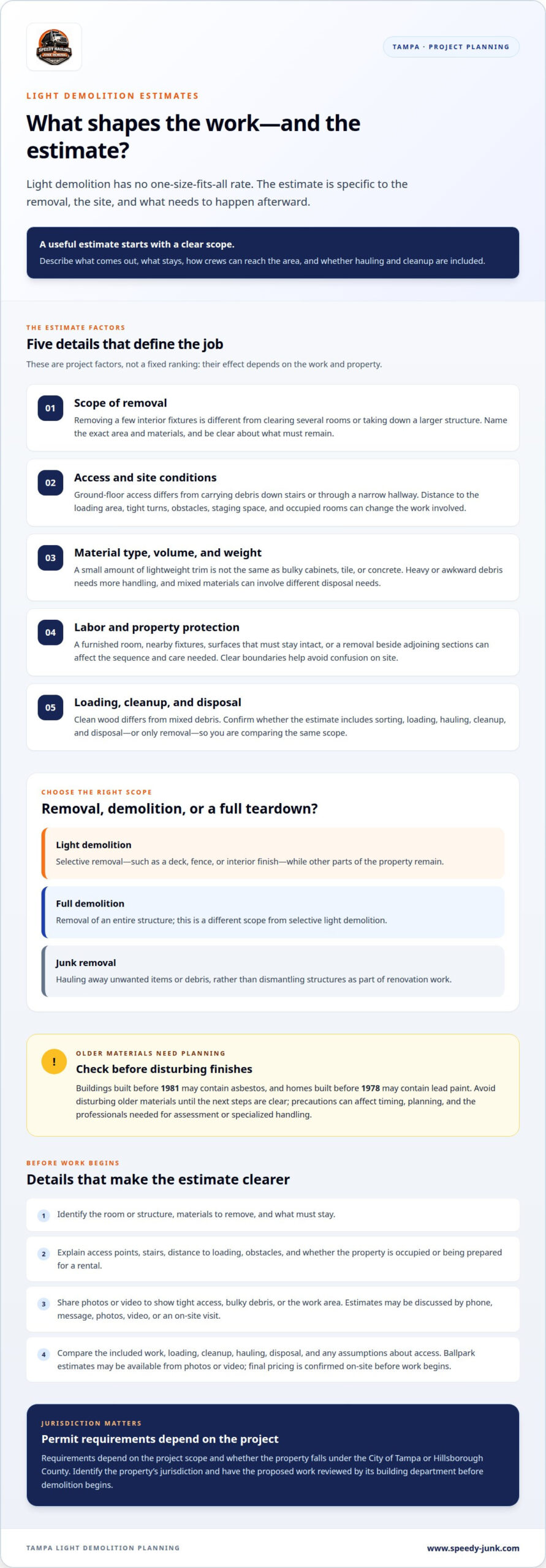
There isn’t one dependable average for light demolition in Tampa. An estimate depends on the removal requested, access, material volume and weight, and disposal needs. Removing material from a ground-floor room with clear access differs from carrying bulky debris through a narrow hallway or out of a backyard with limited entry. Those details shape the work and disposal plan.
For a rental refresh, removing a few interior fixtures is a different scope from clearing several rooms before renovation. Stairs, distance to the loading area, and the type of debris can all affect the labor involved. Be specific about what stays and what goes when describing the project. In Florida, local site conditions and disposal requirements may also affect the work plan.
When comparing light demolition estimates in Tampa, compare the work included, loading, cleanup, disposal, and any assumptions about access. Make sure each estimate describes the same materials and work area, including whether it covers hauling items away or only removing them.
Permit requirements depend on the project scope and whether the property falls under the City of Tampa or Hillsborough County jurisdiction. Identify the property’s jurisdiction and have the proposed work reviewed by its building department before demolition begins.
For a useful estimate, describe the room or structure, the materials to be removed, and how crews can reach them. Photos or video can help show tight access, stairs, or bulky debris. Mention whether the property is occupied or being prepared for a rental, since that context can clarify the work sequence. Speedy Hauling & Junk Removal provides free, no-obligation estimates by phone, message, photos, video, or on-site visit. Ballpark estimates may be available from photos or video, with final pricing confirmed on-site before work begins.
Compare the scope, not just the total. If one estimate includes hauling and another covers removal only, the figures describe different services. Ask for a clear description of the work before scheduling so the removal plan matches your renovation or property turnover.
Factors affecting demolition costs
The work area can matter as much as the materials. Removing a partition from an open, ground-floor room differs from carrying debris down stairs or through a narrow hallway. Distance to the loading area, obstacles, and space to stage materials affect the work. These details help define light demolition services in Tampa for each property.
Material type and volume shape the removal plan. A small amount of lightweight trim differs from bulky cabinets, tile, or concrete. Heavy or awkward debris takes more handling, while mixed construction materials can involve different disposal needs. A residential interior with several material types may require more work than a simple removal.
Existing conditions can change the scope. Buildings built before 1981 may contain asbestos, and homes built before 1978 may contain lead paint. If older finishes or materials are present, avoid disturbing them until the project’s next steps are clear. These precautions can affect timing, work planning, and the professionals needed for assessment or specialized handling.
Access and property protection also affect the work. Removing flooring from a furnished room requires a different sequence than working in a cleared space. Tight turns, occupied areas, nearby fixtures, and surfaces that must remain intact can slow removal. Clear boundaries about what stays help define the scope and reduce confusion on site.
Finally, disposal requirements depend on what the project produces. A pile of clean wood differs from mixed debris containing several materials. The demolition plan should account for sorting, loading, and appropriate disposal. Share the building’s age, work area, material types, access points, and items that must remain when describing the project. These details help establish a realistic scope and make the estimate reflect the actual work.
Light demolition pricing
Light demolition is selective removal, such as taking out a deck, fence, or interior finish while leaving other parts of a property intact. Full demolition removes an entire structure. Junk removal focuses on hauling away unwanted items or debris, rather than dismantling structures as part of renovation work. Knowing which service fits your project helps define the right scope.
Pricing is set for the individual project after a quote request. The amount depends on the work involved, the materials being removed, and what the project requires afterward. For example, removing a small section of cabinetry differs from clearing a room’s built-in fixtures and finishes. A quote should describe the specific work, not just label it “demolition.”
Concrete, fencing, and other bulky materials can change the work involved. The scope also depends on what must remain undamaged and how the project connects to renovation plans. For example, removing a fence as part of a yard update differs from taking down fencing while preserving adjoining sections. Describe the structures and materials when requesting an estimate.
Speedy Hauling & Junk Removal is a family-owned, licensed, and insured junk removal and light demolition company serving Tampa and surrounding communities. We handle small demolition projects such as shed demolition and removal, deck removal, fence removal, and selected concrete removal. Share what needs to go and what must remain so the estimate can reflect the proposed work.
Planning starts with defining the removal area and identifying what must stay. The work plan should account for the intended result and the project sequence. Cleanup depends on the agreed scope. Clarifying these steps early helps keep the work aligned with the renovation, whether you’re updating a home or preparing a rental.
Estimate terms vary, so ask what the estimate covers and whether cleanup is included. If the task mainly involves hauling unwanted items rather than dismantling a structure, junk removal and debris hauling may better match the need. Share the work area, materials, and intended outcome when requesting an estimate, so the proposed scope reflects the project.
Do Tampa homeowners need permits for interior demolition or nonstructural removal?
There isn’t one permit answer for every Tampa interior project. The decision depends on the property’s jurisdiction and the exact work proposed. Removing a finish or fixture is not the same scope as altering a structural element, so describe the work precisely before scheduling demolition.
Start by identifying whether the address falls within the City of Tampa or unincorporated Hillsborough County. Then provide the relevant building department with the project scope, location, and details about what will be removed and retained. The authority can determine which permit steps apply to that specific work. Describe any changes to walls, utilities, or structural components clearly.
For example, “remove part of the kitchen” leaves important questions unanswered. A useful scope states whether the work involves cabinets, flooring, a wall, or connected plumbing or electrical components. Include the room, materials, and intended result. Photos or project drawings can help officials understand the proposed removal, especially when existing conditions are unclear.
Outdoor work needs separate consideration. According to the U.S. Environmental Protection Agency, earth-disturbing work that is part of a demolition project can trigger NPDES stormwater permit coverage. This concerns soil disturbance, not routine interior removal. Have a project involving ground disturbance reviewed for applicable environmental permitting.
Keep the permit decision and demolition scope aligned. If plans change, such as expanding removal from finishes to a wall, update the project description before proceeding. This helps prevent confusion between the approved scope and the work taking place. For a rental renovation, property managers can share the scope with owners and contractors so everyone understands what is being removed and what remains.
Before work begins, organize the address, a plain-language description, and any relevant drawings or photos for the applicable building department. The department’s review determines the permit steps for that project. Don’t treat “nonstructural” as a permit exemption without that review.
Speedy Hauling & Junk Removal: Shed Demolition & Removal
Speedy Hauling & Junk Removal can remove unwanted items as part of a larger property cleanout. A garage cleanout can clear tools, household items, and other clutter before renovation work. We also remove furniture and appliances stored nearby, helping open space for the next step.
For a property with extensive household clutter, hoarder cleanouts can help address the contents and reclaim usable space. Keep the demolition scope and the items to be removed clearly defined so the work is organized around your property’s needs.
Contact Speedy Hauling & Junk Removal to discuss the cleanout or removal you need.
Move Your Project Toward a Clear Scope
Before work begins, turn your renovation idea into a practical plan. Decide what needs to go, what must stay, and what the cleared space needs to support next. Clear boundaries help keep conversations focused, whether you’re preparing a rental, updating a home, or making room for a contractor’s next phase.
For light demolition services in Tampa, describe the area and the outcome you want. Include the materials involved, access conditions, and whether unwanted items also need removal. If the project includes furniture, appliances, or a garage cleanout, mention those needs alongside the demolition scope. A clear starting point makes it easier to discuss the right help for your plans.
When you’re ready to talk through your project, contact Speedy Hauling & Junk Removal. Take the next step at your own pace and move toward a space that works better for you.
Frequently Asked Questions
How much does demolition cost?
Demolition costs depend on the specific work, and an estimate is needed to price a project. A small removal can involve different labor and disposal needs than a larger tear-out. For a useful quote, describe the exact area and intended outcome, and note whether the project is part of a remodel, rental turnover, or property cleanup. Also clarify which materials should remain.
What light demolition services are available in Tampa, Florida?
Small-scale projects can include shed demolition and removal, deck removal, fence removal, concrete removal, and carpet removal. These services address particular structures or materials, not full-building teardown. For example, a homeowner updating a yard may need an old fence removed, while a property manager may need a shed removed from a rental before preparing the space for its next use.
What factors affect the cost of small-scale demolition in Tampa?
Project scope, material type, access, labor, and debris handling all shape the work. A narrow side yard can make fence removal more involved than working beside an open driveway. The plan also changes if a structure shares space with items that must remain. Describe the boundaries clearly, such as which deck sections are coming out and which should stay.
What safety risks should homeowners consider before light demolition?
Before work begins, consider the project boundaries, the materials involved, and whether the work area can be kept separate from everyday household activity. Don’t start removal until the scope and next steps are clear, especially in an older home where materials may need assessment. For example, plan how household members will stay clear of a room during renovation work.
How do I find licensed and insured light demolition contractors in Tampa?
Speedy Hauling & Junk Removal is fully licensed and insured for all junk removal services. Before scheduling, clarify what needs to be removed and what must remain, then request a free, no-obligation estimate.

Article by
ALBERTO HERNANDEZ
Alberto Hernandez is the owner of Speedy Hauling & Junk Removal, a family-owned junk removal and light demolition company serving Tampa Bay. With years of hands-on experience completing residential and commercial junk removal, property cleanouts, debris hauling, and light demolition projects, Alberto shares practical information based on real jobs and real customer needs throughout the Tampa Bay area.