
A retail space cleanout in Westchase can include heavy lifting, loading, and hauling unwanted items after a store closure or remodel. Depending on the space, the work may also involve sorting items for donation or recycling and clearing leftover debris. The scope depends on what needs to go, how much there is, and how easily the team can reach it.
Clearing a storefront can feel like one more major task during an already busy transition. This guide explains what a cleanout can cover, what affects the work, and how items may be handled once removed. You’ll also learn what to consider when preparing the space so the process is easier to plan.
Key Takeaways
- Identify which fixtures, furnishings, appliances, and debris need to leave so the cleanout can be scoped clearly.
- Plan access and loading around item size, weight, volume, and the labor needed to remove everything from the space.
- Separate usable items and recyclable materials where practical, and decide how to handle leftover inventory before removal begins.
- For a store closure or remodel, organize the cleanout around the work that follows so the space is ready for its next use.
Retail store junk removal and cleanout services
A retail cleanout in Westchase can clear fixtures, furnishings, packaging, and store equipment. The scope depends on what remains and how the space needs to be left.
Service Options and Clearing Time
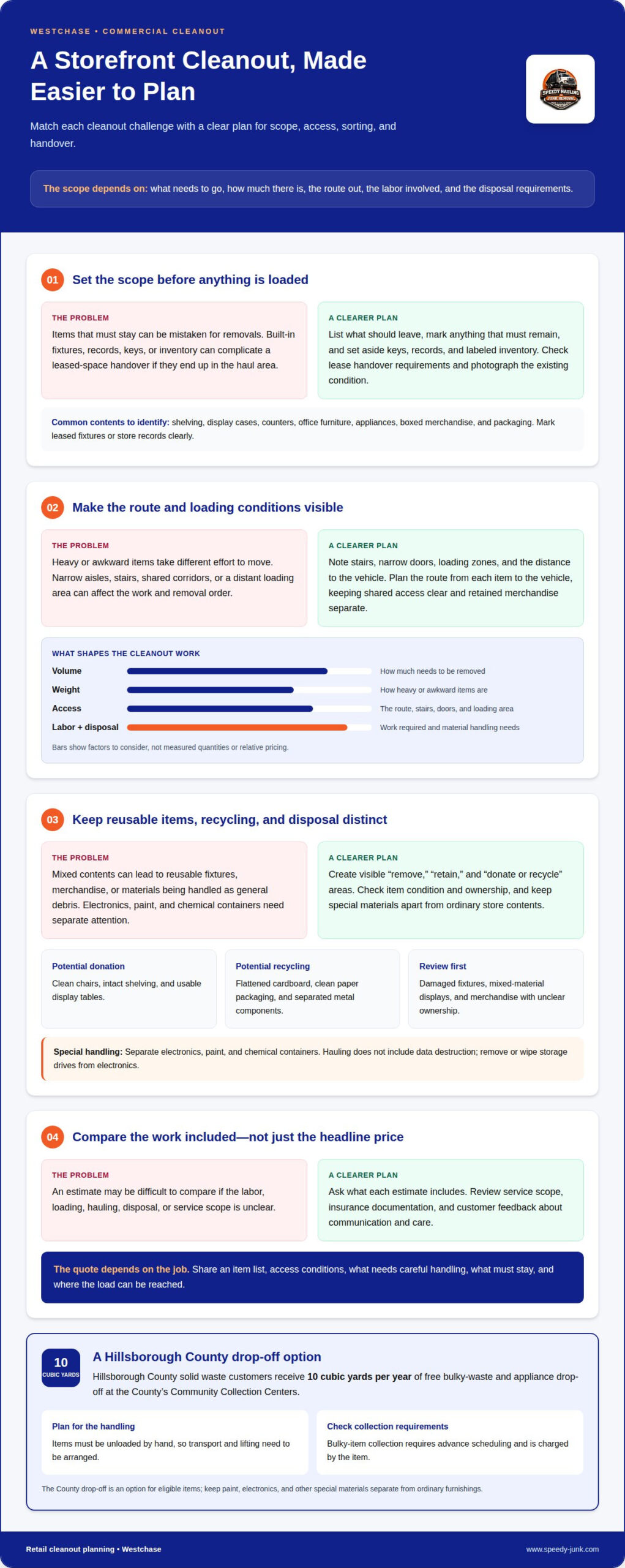
Commercial cleanout work may cover shelving, display cases, counters, office furniture, appliances, and boxed merchandise. Before scheduling, make an item list and mark anything that must stay, such as leased fixtures or store records. Clearing time depends on the load’s volume and weight, labor needs, access routes, and disposal requirements. A ground-floor shop with a clear loading area differs from a crowded space with narrow aisles or stairs.
Compare estimates by asking what labor, loading, hauling, and disposal they include. Review customer feedback for comments about communication and care, and compare insurance documentation and service scope. These details help you understand what each estimate covers without relying on a headline price alone.
Common removal items include shelving, chairs, desks, display racks, refrigerators, and packaging. Sort items into clear groups: remove, retain, and set aside for donation or recycling. Labeling a working appliance or reusable fixture helps prevent confusion during loading.
Separate electronics, paint, and chemical containers from ordinary store contents before removal. Remove or wipe storage drives from electronics, since hauling does not include data destruction. Paint and other potentially hazardous materials need handling suited to their contents and condition, rather than being mixed with cardboard or general debris.
Graffiti is not a cleanout item. A cleanout can remove loose materials, but it does not remove paint from walls, windows, or signs.
Leased Space Clearing Risks
For a leased storefront, compare the lease handover requirements with the items marked for removal. Photograph the existing condition, identify fixtures that belong to the landlord, and keep keys, records, and labeled inventory out of the haul area. Removing a built-in counter or leaving debris behind can complicate the handover. A clear written scope helps distinguish removable contents from property that should remain.
Westchase’s community rules govern what can be placed outside a home, so residents should check current association rules before staging items at the curb for pickup. The company collects payment on site after completing the job and accepts major credit and debit cards and Apple Pay.
Heavy lifting, loading, transport, and disposal
Moving a retail load involves more than carrying boxes through the front door. Shelving, display counters, appliances, and cartons differ in weight, shape, and loading needs. Plan the route from each item to the vehicle, and identify shared corridors or loading areas that need to remain accessible. A clear sequence also helps staff keep retained merchandise separate during removal.
Hillsborough County solid waste customers receive 10 cubic yards per year of free bulky-waste and appliance drop-off at the County’s Community Collection Centers. Items must be unloaded by hand, so this option means arranging transport and handling the lifting yourself. Hillsborough County also requires advance scheduling for bulky-item collection and charges by the item.
Before loading, group items by type and mark anything that must remain. Contain loose materials, and place heavy items where they can be reached without shifting other cargo. Share details about stairs, narrow doors, loading zones, and the distance to the vehicle. These conditions affect the work and the order of removal.
For commercial cleanouts in Tampa, disposal depends on the materials and the chosen route. The County’s bulky-waste and appliance drop-off is one option for eligible items. Keep paint, electronics, and other special materials separate from ordinary furnishings. A cleanout limited to movable contents differs from work that alters the premises, so define the scope before arranging hauling.
A retail cleanout quote depends on volume, weight, accessibility, labor, and disposal requirements. A stack of cartons beside an entrance takes different effort from heavy fixtures carried through a narrow corridor. The price depends on the job and is provided after a quote request.
Prepare an item list and note access conditions before requesting an estimate. Include which items need careful handling, which must stay, and where the load can be reached. Those details help clarify the removal plan.
Recycling and donation practices
Sorting first helps separate reusable store contents from materials headed for recycling or disposal. During cleanouts, items are sorted for donation and recycling first. A clean display shelf, usable chair, and flattened cardboard each need a different decision. Marking categories before loading reduces mix-ups and keeps retained merchandise out of removal piles.
Start with a quick condition check. Set aside clean, intact fixtures and furnishings for review, then ask the store owner which items are approved to leave. A working desk may be reusable, while a broken display with missing parts may not be. Keep approved items in a separate, clearly marked area.
- Potential donation candidates: clean chairs, intact shelving, and usable display tables.
- Recycling candidates: flattened cardboard, clean paper packaging, and separated metal components.
- Items to review: damaged fixtures, mixed-material displays, and merchandise with unclear ownership.
For a Westchase shop, sort merchandise separately from fixtures. Check labels, inventory records, or manager notes before releasing unopened products. Store-owned goods, vendor property, and consigned items may require different decisions. A marked “keep” zone and a separate “donate” zone make those choices visible to everyone handling the cleanout.
Keep materials dry and free from food residue when preparing cardboard or paper for recycling. Break down empty cartons only after checking for remaining stock, packing slips, or customer information. Remove loose packaging from reusable fixtures, but keep it separate from materials awaiting review. These steps make each category easier to identify.
Whether an item can be donated or recycled depends on its condition, material, and separation. A clean metal rack is easier to sort than a damaged fixture combining wood, glass, and wiring. Record any items designated to stay, and photograph special fixtures before removal. That record helps the store team track what leaves and what remains.
Cleanouts for store closures, remodels, and leftover inventory
A store closure needs a different plan from a remodel. For a closure, identify merchandise, fixtures, office contents, and debris that must leave. For a remodel, separate items needed for reopening from materials to be cleared. A floor plan or marked photo can show which counters, shelves, and display units should stay in place.
Prepare the space by confirming ownership, sorting inventory, and clearing sensitive records before removal begins. Mark items to keep, donate, recycle, or remove, then share the list with everyone coordinating the handover. Keep electronics with stored information separate, and wipe or remove drives before pickup because hauling does not include data destruction.
- Protect inventory: Set aside saleable stock, returns, vendor-owned goods, and unopened products for separate review.
- Mark fixtures: Label each shelf, counter, sign, or display as retained or removable before crews begin.
- Prepare access: Clear the path from the sales floor to the loading area, including doors and shared corridors.
Leftover inventory deserves a deliberate decision. Use store records to distinguish owned merchandise from consigned goods or vendor stock. Pull customer orders, returns, and records from cartons before those boxes join the removal pile. A labeled “hold” area prevents uncertain items from leaving with unwanted fixtures.
For a remodel, coordinate the cleanout with the next phase of work. Remove loose furnishings and unwanted contents before installers need access to walls, flooring, or display areas. Keep a dated photo of the cleared rooms and note any items intentionally left behind. That record can help the manager and property representative review the turnover.
Keep the scope focused on movable contents and clearly identified debris. If a display case or built-in counter may be part of the leased premises, get direction from the responsible parties before removal. A written checklist gives staff, managers, and the hauling team one shared reference.
Before handoff, confirm the cleanout date with the property representative and align the removal plan with the store’s closing or renovation schedule.
Speedy Hauling & Junk Removal: Furniture Removal
Speedy Hauling & Junk Removal can remove unwanted retail furniture when a shop closes, changes its layout, or prepares for remodeling. Furniture removal is useful for bulky pieces that are difficult to move through a sales floor, such as desks, chairs, tables, and display units. Identify what should leave and keep retained fixtures separate before removal begins.
For a broader property cleanout, organize the request around the items and access conditions. Store furniture, appliances, and other contents may require different handling, so a clear item list helps define the job. Keep merchandise, records, and anything belonging to a landlord or vendor out of the removal area.
Contact Speedy Hauling & Junk Removal to discuss furniture removal for your retail space.
Make the Next Move With a Clear Space
Planning a retail space cleanout in Westchase is also a chance to prepare the property for what comes next. Before removal day, decide who will approve the final walk-through, how access will be arranged, and what condition the space needs to be left in. A shared plan helps prevent last-minute decisions from slowing the transition.
Once your priorities are clear, choose the removal scope that fits the property. Speedy Hauling & Junk Removal offers furniture removal, garage cleanouts, and appliance removal for businesses clearing unwanted contents. If the space includes a mix of items, describe the overall job and identify anything that must remain. That helps keep the next step focused on your needs.
A well-planned cleanout can make it easier to hand over, renovate, or prepare a storefront for its next use. Request a free, no-obligation estimate when you’re ready.
With a clear plan in place, you can move forward with confidence and make room for what’s next.
Frequently Asked Questions
Which retail cleanout companies serve Westchase, Tampa, Florida?
Speedy Hauling & Junk Removal provides commercial junk removal in Westchase and the surrounding Tampa Bay area. For a retail space cleanout in Westchase, prepare a brief item list and note any access limits, such as a narrow service entrance or shared loading area. Same-day service may be available depending on availability and scheduling. Contact Speedy Hauling & Junk Removal to request a free junk removal estimate for your storefront.
What items can retail cleanout companies remove, including fixtures and shelving?
Retail cleanouts can include movable shelving, freestanding display racks, counters, desks, chairs, and other unwanted furnishings. Separate removable items from built-ins or fixtures that belong to the landlord before arranging hauling. Speedy Hauling & Junk Removal offers commercial junk removal and furniture removal in Tampa. Share what needs to go and identify anything that must stay, so the removal scope is clear.

Article by
ALBERTO HERNANDEZ
Alberto Hernandez is the owner of Speedy Hauling & Junk Removal, a family-owned junk removal and light demolition company serving Tampa Bay. With years of hands-on experience completing residential and commercial junk removal, property cleanouts, debris hauling, and light demolition projects, Alberto shares practical information based on real jobs and real customer needs throughout the Tampa Bay area.